
For all e-commerce site owners, being at the top of searches is a top priority. While paid ads can place you at the top of the SERP, staying there for a long time can be costly. If you want permanent high rankings, e-commerce SEO can help you achieve this.
By using professional strategies for your e-commerce SEO work, you can help your website rank better in search engines and attract more organic traffic. This can help your e-commerce business grow and succeed.
In this e-commerce SEO guide, we explain the SEO strategies, tips and optimization steps you need to improve your site effectively.
100+ companies trust us for E-Commerce SEO!




E-commerce SEO is the work done to improve the organic search engine ranking of your site. The goal is for your site to be better understood by search engines such as Google and to rank higher for long-tail keywords related to product descriptions and services that consumers are looking for.
In this way, your site traffic and sales can increase. For e-commerce brands, SEO is not only a visibility channel; it is a long-term growth system that brings purchase intent, category demand and product discovery together.
Keyword research is an important part of your SEO strategy. Before creating an SEO strategy for e-commerce sites, you should find out which search terms your target audience uses.
Your potential customers search terms are actually your keywords. Based on the keywords you identify, you can start creating useful and fully SEO-friendly content. This section explains the main steps involved in keyword research.
Keyword research is the process of finding all possible search engine queries that could be relevant to your business and your customers. Keyword analysis involves not only finding specific keywords, but also sorting and prioritizing them into logical, related groups.
It can then provide information on how you can modify existing pages on your site or create new content. For e-commerce SEO, keyword selection must consider categories, products, search intent and the buying journey together.
Doing keyword research on e-commerce SEO sites is one of the most important e-commerce SEO studies and is a strong way to reach your target audience with SEO-compatible content.
Keyword analysis is an important factor in product and category work. For e-commerce sites, keyword analysis should be carried out regularly and turned into a clear content and optimization plan.
You probably have a few keywords that you want to rank high on the search results page. These words can be your products, services or other topics on your e-commerce site. The first step in e-commerce SEO keyword research is to create a keyword list.
Analyze your e-commerce site in detail and list the terms you believe are important. Consider your goals, your customer goals, your target audience and your main competitors.
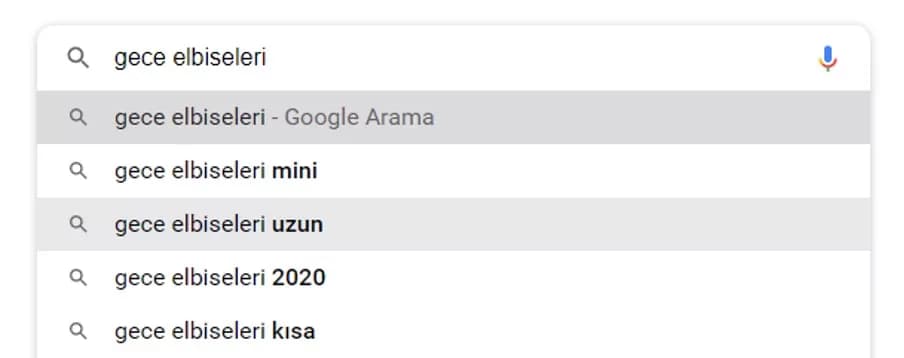
If you are determining keywords for categories and products, avoid choosing only single-word and very general terms. Competition is usually high for those words, so short-tail and long-tail keywords should be balanced carefully.
Competitor analysis on an e-commerce website is one of the analyses that all e-commerce site owners should perform. A thorough competitor analysis helps you create a roadmap for making your site as strong as your competitors.
When starting e-commerce SEO work, identifying the strengths and weaknesses of both your site and your competitors sites makes prioritization easier. You can discover weak areas on your own site, identify areas where competitors are weak and decide on the right SEO strategy.
In practical terms, SEO competitor analysis teaches what works in your industry, reveals opportunities, shows what competitors do well and helps you decide which SEO work to prioritize.
Identifying keywords where your competitors are successful is an important part of developing your own e-commerce SEO strategy. By targeting these words, you can achieve similar visibility and rank higher in search engines.
Start by identifying your most important competitors in the industry. These businesses should offer similar products or services and share common points with your target audience.
Use tools such as Ahrefs, SEMrush and Ubersuggest to analyze which keywords competitors rank for in organic traffic and paid search results.

Among the keywords your competitors are successful with, there may be opportunities you should target. Evaluate these words and determine which ones are most relevant for your business.
Analyze your competitors content strategies and identify what type of content performs well. Then create original, high-quality content around the keywords and topics that match your own strategy.
For search engine marketing, it is important to analyze your competitors site structure and improve your own user experience and navigation.
Evaluate product categories, filtering features, search functions, menu and navigation, and content hierarchy. These findings help you build a more effective and understandable structure for your own e-commerce site.
Technical SEO work on your e-commerce site refers to site and server optimizations that help search engine bots crawl and index your site more effectively.
When starting e-commerce SEO, first review mobile compatibility, status code errors, robots.txt, indexing, duplicate title tags, duplicate meta descriptions, content quality, broken links, 404 pages and XML sitemaps.
It is important to emphasize SEO-compliant, unique and valuable content for search engines. Duplicate content, title and meta description issues should be handled carefully.
Duplicate pages can lower rankings. Every page should have a unique and meaningful title, and each important page should have a unique SEO-friendly meta description.
404 pages appear when users cannot access the page they want. These errors can be caused by incorrect URLs, broken links and deleted pages. They can damage user trust and affect rankings.
Use Google Search Console or professional SEO tools to identify 404 errors. Then fix wrong URLs, redirect broken links or create new pages to replace deleted ones where necessary.
301 and 302 redirects occur when page addresses change. They help search bots replace old page addresses with new ones and direct users to the correct pages.
Misconfigured redirects can create confusion for search bots and users, which can cause ranking loss. Review redirects regularly and make sure they are necessary, correctly targeted and not chained.
Slow loading sites can cause users to abandon your site and can lead to lower rankings. Check site speed regularly and make improvements that positively affect user experience and ranking potential.
Tools such as Google PageSpeed Insights, GTmetrix and Pingdom can help you analyze speed and find improvement opportunities. On-site SEO also makes your site understandable to search engines and valuable for users.
Keyword optimization is an important factor for higher search engine rankings. Place keywords naturally in titles, subheadings, meta descriptions and content so search engines understand what your page is about.
Excessive keyword density or keyword spam can harm rankings. Use keyword research to identify terms used by your target audience and include them naturally in valuable content.
Site structure is how the pages of your website are organized and how the relationships between them are configured. A clear site structure helps users navigate comfortably and is also important for SEO.
Sitemaps, menus, subpages, categories and internal links should be organized logically. This helps users access information quickly and helps search engines understand your site topic and hierarchy.
In-site linking creates a convenient network of links between pages on your site, allowing users to access related content easily. It improves user experience and helps search engines understand your content better.
When linking within a website, links should be placed correctly and directed to the right pages. Anchor text should be clear, relevant and helpful without becoming spammy.
Searches from mobile devices are increasingly important. A mobile-friendly e-commerce site improves user experience and helps you achieve stronger search engine performance.
Customer reviews and ratings show how trustworthy your site is and how good your product quality is. Search engines can also use these signals when evaluating site quality.
Encourage customer feedback and publish it on your site. Positive reviews build trust, while negative feedback can help you improve products, services and customer satisfaction.
Structured data is important for e-commerce sites because it helps search engines understand your content better and provide users with more meaningful results.
Product price, review count, star rating, availability and similar information can be marked up. This can help your search results appear richer and more informative.
By integrating social media platforms, you can bring your content to wider audiences and increase brand awareness. Social signals can support e-commerce SEO indirectly through discovery and engagement.
A blog enriched with regular, high-quality and original content increases users interest in your site and provides fresh content for search engines.
Prepare blog posts through keyword research and current industry topics. Blog content can turn informational searches into high-quality e-commerce traffic.
Link building means creating one-way links to a website to improve search engine visibility. When a relevant site links to your website, it gives search engines a quality and authority signal.
A link building strategy is important for SEO success. Quality content, industry relationships and natural backlinks can increase site authority, while spam links should be avoided.
Local SEO is important for e-commerce sites, especially for businesses focused on a specific geographic region. Create and optimize your business profile, target local keywords and register with relevant local directories.
SEO analysis tools are used to monitor website performance and make improvements. They measure traffic, keyword rankings, backlink profiles, technical errors and other SEO metrics.
Google Analytics analyzes traffic sources, user behavior and site performance. Google Search Console monitors how websites appear in search results and how search engines index them.
Paid tools such as Ahrefs, SEMrush and Moz can support keyword research, backlink analysis and competitor analysis. They help you understand what keywords to focus on and how competitors succeed.
These tools are essential for measuring and improving e-commerce SEO performance. If you want to build an e-commerce site from scratch or improve an existing store, you can contact us.
The most frequently asked questions about E-Commerce SEO
Do not lose time
Join Our Success Stories!
Mobitek is an integrated SEO agency producing data-driven digital marketing solutions in Turkey and globally. With more than 20 years of experience and an expert team, Mobitek provides brands with performance and solution-oriented marketing services.