Every digital medium that we see, enter and
transact with, or simply look at to access
something, exists for a reason. For most
websites, we can attribute this reason to making
a profit, but we can also say that those who
create these websites will always have a reason
and a goal they want to achieve.
For example, you want your content published on
a website to be read, that’s your goal. To
achieve this goal, you need to do something to
help your readers. You can’t expect people
to find and review your content. That’s
why website owners need a tracking tool to see
how they are doing and where they are in terms
of achieving their goals. The concept that meets
this need is transformation. In this article, we
will answer the question “What is
Conversion?” and see how conversion can
help us achieve our goals.
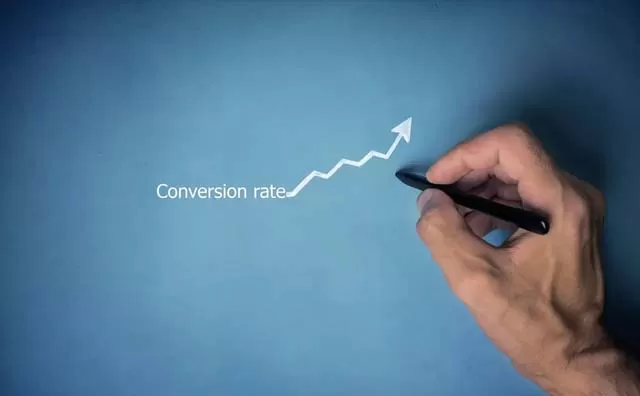
The concept of conversion is a ratio that
expresses how much the goals set in digital
terms are realized. Likewise, in addition to the
example we have given, situations such as
purchasing products on your e-commerce site or
users becoming members of your website depending
on your goal can be shown as conversion goals.
To see how well these goals are being realized,
website owners don’t just rely on the
number of users who successfully perform these
actions. In order to see this success, they take
the conversion rate as a reference. Thanks to
this ratio, you can measure how successfully
your commercial goals are realized in the
digital world.
The most effective way to understand the
conversion rate is to analyze it on an
e-commerce site. For example, you have an
e-commerce site selling clothes. Normally, your
conversion goal will be to want visitors to your
site to shop and buy clothes. For this, you need
to look at what percentage of people who visit
your site make a purchase. This way you can
calculate your conversion rate and measure how
successful you are in your goal. Conversion rate
can be looked at for many different goals, not
just sales. For example, you can see how
successful you are at this goal by looking at
how many people who come to your website become
members. And what does this ratio indicate?
E-Commerce experts say that “If the
figures obtained as a result of conversion rate
calculations are below the ideal line, it means
failure”. If your conversion rate is low
in this way, it means that you are using the
wrong marketing strategies. As a result, you can
re-evaluate your marketing strategies and take
steps to increase your conversion rates. In this
way, you make it easier for users who visit your
site to realize your goals. At this point, it is
useful to know what factors affect conversion
rates.
Up to this point, you’ve probably realized
that the concepts of conversion and conversion
rate have an important place in e-commerce.
Keeping in mind that it can be used in a useful
way outside of this field, we can list the
factors that affect conversion rates in the
field of e-commerce in a few items. The factors
are as follows:
Each of these factors, alone or in combination,
has a negative impact on conversion rates on
your site. At this point, you may be wondering
how to increase your conversion rate.
Increasing conversion rates can be done in
combination with many different strategies due
to their impact factors. Perhaps the most
important of these may be related to the design
of your website. Users who come to your site
through your ads may have security concerns due
to your design, or may find it difficult to sign
up or make purchases. Improving your website in
these technical and visual ways will help
traffic to your site move in the direction of
your goals.
The users who come to your site from the ads you
provide are a factor that cannot be ignored in
the formation of conversion. That is why ads and
the texts and keywords in the content of these
ads are very important. If you want to increase
your conversion rates in this respect, you need
to better align your keywords and ad copy with
your goals. If these factors are not relevant to
your goals, for example the products you are
going to sell, your conversion rates will be
low.
Creating a thank you page for transactions such
as signing up or making a purchase on your site
will also help increase your conversion rates.
You can set the thank you page to appear after
users complete the goals you set. Apart from
this, we will additionally examine conversion
optimization and conversion code under different
headings.
Conversion rate optimization, known as CRO,
involves removing factors that will reduce
conversion rates on your website. In order to
make a correct optimization, it is necessary to
correctly identify the factors that reduce
conversion rates on your website. Effectively
using the tools to detect them enables you to
make the healthiest measurements for
optimization. But first of all, you need to
define your conversion goals precisely in order
to optimize your conversion rate. For example,
if you sell your products online, your
conversion goal is for users to add them to
their carts and make purchases. This is the
common conversion target for e-commerce in
general.
Conversion code is a tool to see the
interactions related to your conversion goals in
your optimization processes. The special feature
of this tool is that it tracks all actions that
users take on your website, not just goal
completion actions such as purchases or
sign-ups. For example, you can use this code to
see which pages a user spends more time on when
they visit your website. In this way, you can
identify users who will complete your goals, as
well as valuable users who will not directly
bring you profit, but will know more about you
and your website.