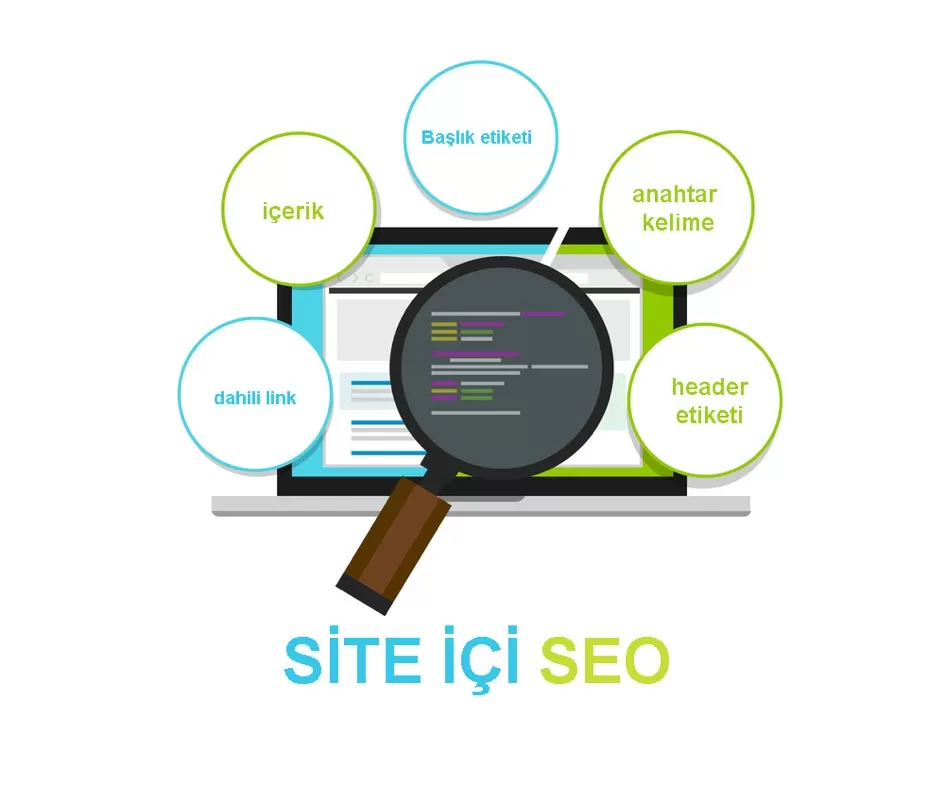
As Google becomes more sophisticated, one of the
most important factors affecting page
optimization is emerging as relevance.
How relevant is your page to the query?
Don’t forget to ask yourself this question
throughout the entire process!
You have about eight seconds to get a visitor to
interact with your website. As engagement
increases and your users spend more time on the
site, their experience improves accordingly.
After understanding everything that goes into
on-page SEO efforts, analyze
your site to see how the anatomy of your pages
is performing.
Perhaps the most vital aspect of your on-page
SEO efforts is the implementation of tags. Some
may no longer be as beneficial for SEO as they
once were, but if written and used optimally,
they can still improve your traffic.
Meta tags are used to give search engines
information about your page. Achieving high
rankings is related to relevance and user
satisfaction, but adding specific meta tags
influences users and can increase your
click-through rate.
These are the words that users see in search
engines for both organic results and paid ads,
and they are also visible at the top of every
tab in your browser.
The title tag shows what the page is about. When
ranking web pages for specific queries, Google
looks at the title tag and compares it with the
rest of the page’s content.
The meta description tells users what they will
find on the page. Although not a direct ranking
factor, search engines do read meta descriptions
to identify the audience that the page’s
content is targeting.
A well-written meta description can create a
competitive advantage in search results and lead
to a higher click-through rate with a better
conversion rate.
Your landing page or blog should include
multiple heading tags, ranging from h1 to
potentially h6. The most important one is the h1
tag. You should never have more than one h1 tag
on any page.
Use headings to represent different parts of the
page. You will notice its impact both in terms
of SEO and usability.
As an SEO factor, you need to provide users with
a clear view of what the page is about by
complementing the page’s title with the
words used in the heading tags.
Headers should be used to configure the page.
Make sure the content includes the title.
The primary keyword of the page should be
included somewhere in your h1 tag. Avoid
skipping the h1 tag on a page, as it allows both
your visitors and Google to understand the
topic. Many blogs, especially those on
WordPress, automatically set the blog
post’s title as the h1 tag.
Do not use the same h1 tag on more than one page
of your site. This could have harmful effects on
your SEO, as Google wouldn’t know which
page to rank for a query containing this
heading.
The Yoast SEO plugin in WordPress helps you
understand how strong each page is. It analyzes
page factors to ensure that your page is fully
optimized. As an added benefit, it alerts you
about issues related to the page title, meta
description, headings, images, content, and
other elements.
For landing pages and some blogs, remember that
your users don’t read the whole page.
Headings and subheadings break up the page and
make the presentation look cleaner.
Subheadings help users navigate through the
page. If you’re changing the topic or
discussing a different aspect of a service, use
the h2 tag. If further subdivision is needed and
a subheading is required under h2, use the h3
tag.
When writing URL strings, make sure they are
short, concise, and easy to read!
Keep your URL short. The shorter the URL, the
easier it is to share while creating a better
user experience. You should aim to ensure that
your readers can quickly recognize what your
page is about without seeing a mix of numbers,
categories, symbols, or anything else in the
string.
Use your primary keyword in the URL.
When Google crawls your page, it wants to match
user intent. Your content should clearly convey
which product or service you offer or the exact
topic of your blog.
To help weed out spammy, keyword-stuffed and
thin-content top-ranking websites, Google
released the Panda algorithm in February 2011
and updates it regularly. If you have
low-quality and weak content, your website will
become difficult to find on the internet.
Just like with your meta tags, outline meta
keywords for a product or service page targeting
multiple queries or a single focus keyword for
blogs.